Could Reflexology Be The Answer To Your Problems?
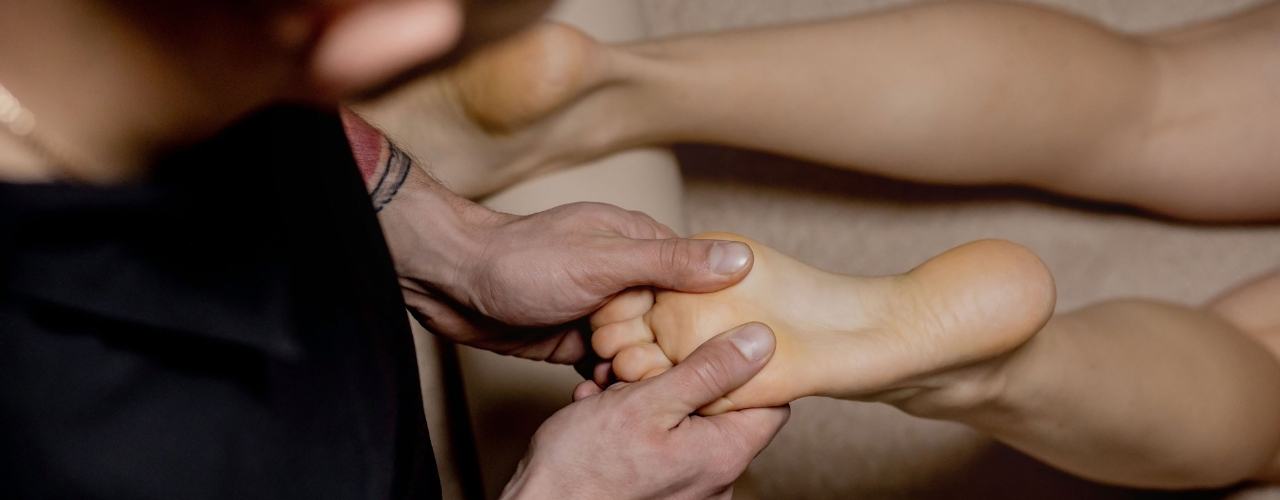
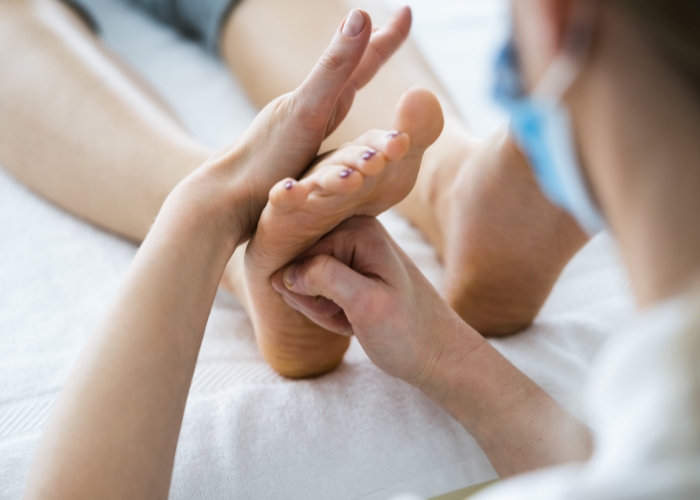
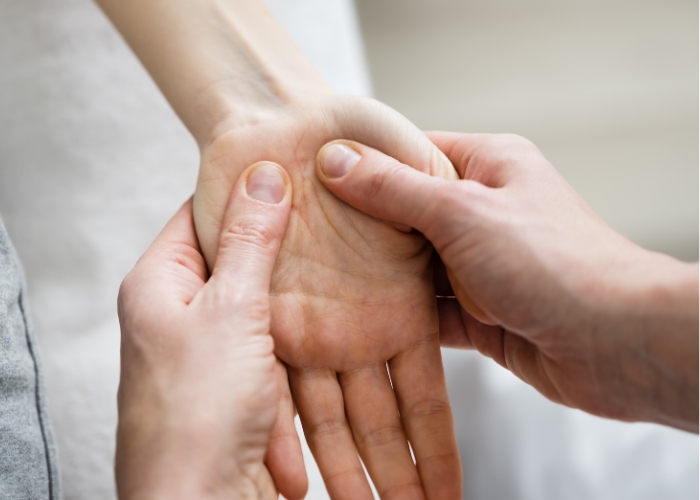
Reflexology aims to relieve tension or treat health concerns through the application of pressure to specific locations or areas of the feet. Reflexology is based on the principle that certain portions of the hands and feet correspond to different organs and systems of the body and can have an effect on those other areas. In certain instances, the person’s hands or ears may also be subjected to pressure.
If you’re interested in learning more about reflexology and if it’s the best form of treatment for you, contact Expert Physio Plus today.
Background of Reflexology
Egypt, China, and other cultures have utilized techniques comparable to reflexology for thousands of years. An American physician named William Fitzgerald proposed in the early 20th century that the foot could be “mapped” to other parts of the body in order to diagnose or cure medical conditions. He labelled the sections of the foot that he believed governed each of the body’s ten zones. He suggested that applying moderate pressure to a specific area of the foot could provide relief in the targeted area. This method was originally known as zone therapy.
Images of the feet are depicted on reflexology charts, along with schematics depicting the corresponding internal organs and other regions of the body. It is often thought that the left side of the body is mirrored in the left foot, while the right side is reflected in the right foot.
Theories behind Reflexology
Although numerous hypotheses have been proposed to explain the mechanism behind reflexology, none have been scientifically proved.
One theory suggests that the human body possesses an unseen life force or energy field, and that this force, if it becomes obstructed, can lead to illness. It has been hypothesized that stimulating the nerves and muscles in the foot might help unblock and improve the flow of essential energy to various sections of the body, which in turn can promote the body’s natural ability to repair itself.
The production of endorphins, which are the body’s natural painkillers, the activation of nerve circuits inside the body (also known as “cutaneo-organ reflexes”), the facilitation of lymphatic flow, or the dissolution of uric acid crystals are some of the other hypotheses that have been proposed.
What Does Reflexology Treat?
Scientists have investigated the effectiveness of reflexology in treating the following medical conditions:
- Relaxation, anxiety
Early evidence suggests that reflexology may be useful for relaxation, although it is not clear if reflexology is better than (or equal to) massage or other types of physical manipulation. Better research is needed to make a recommendation. - Premenstrual syndrome
Two months of weekly reflexology sessions may help reduce the severity of premenstrual symptoms in the short-term, according to early studies in humans. Further research is necessary to reach a firm conclusion. - Headache
Early research suggests that reflexology may relieve pain from migraine or tension headaches and that it may reduce the need for pain medication. However, study in this area has not been high quality, and better research is needed to reach a firm conclusion. - Irritable bowel syndrome, encopresis, constipation
Preliminary study of reflexology in humans with irritable bowel syndrome does not provide clear answers. One small, controlled clinical trial showed reflexology to be an effective method of treating encopresis (fecal incontinence) and constipation over a six-week period. Further research is needed to confirm these results. - Comfort and palliation in cancer patients
Early research reports that reflexology is no better than foot massage in palliative cancer care. - Chronic lower back pain
Preliminary evidence in humans suggests that reflexology is not helpful for chronic lower back pain. Better research is needed to make a firm conclusion.
- Disease diagnosis
Preliminary research regarding reflexology techniques for diagnosing diseases is mixed. Better research is needed to clarify these results. - Ear disorders
A study in children with ear disorders receiving treatment from a reflexologist showed this treatment to be less effective (in terms of number of ear disorders, number of antibiotic treatments, number of sickness days, and duration of ear disorders) than treatment given by a general practitioner. Further studies are needed before conclusions can be drawn. - Fetal activity
A small study reported that foot massage for three minutes increased fetal activity in midgestation. Hand massage did not increase fetal activity. Further studies are needed before conclusions can be drawn. - Foot edema
Preliminary research reports that reflexology is a preferred therapy in women with ankle and foot edema in late pregnancy. Further research is needed before conclusions about effectiveness can be made. - Multiple sclerosis
Preliminary evidence suggests reflexology treatment may be beneficial in the management of some motor or sensory symptoms of multiple sclerosis. Additional research is needed to make a firm conclusion. - Cancer pain
Early evidence suggests foot reflexology may help manage some cancer pain. Better research is needed before a firm conclusion can be drawn.
Studies show that reflexology can not only decrease physical pain felt in areas all over the body, but also cut down on stress levels. Reflexology therapy can even improve your quality of sleep. Your registered reflexologist can show you points on your toes that correspond with the release of natural endorphins. Once released, these endorphins help you relax. Since it is low risk and non-invasive, reflexology therapy is an effective and reasonable form of physical therapy treatment for pain management and relaxation.
Ready to find relief?
Reflexology is a treatment that can be helpful for people struggling with low energy levels, cramping, and even sinus trouble. It’s a very common treatment used by registered reflexologist and offers a safe, drug-free way to decrease pain symptoms.
If you’re living with a condition that is causing you pain or making it hard for you to do the things you love, reflexology might be the key to your problems. Contact Expert Physio Plus today to schedule an appointment with one of our Orléans, ON and Ottawa, ON registered reflexologist and get back on your way to a pain free lifestyle.
Sources:
- Natural Standard: An organization that produces scientifically based reviews of complementary and alternative medicine (CAM) topics
- National Center for Complementary and Alternative Medicine (NCCAM): A division of the U.S. Department of Health & Human Services dedicated to research
- National Center for Biotechnology Information: Foot Reflexology: An intervention for pain and nausea among inpatients with cancer. https://www.ncbi.nlm.nih.gov/pmc/articles/PMC9246290/
- National Center for Biotechnology Information: Reflexology treatment relieves symptoms of multiple sclerosis: a randomized controlled study. https://pubmed.ncbi.nlm.nih.gov/12926840/
- National Center for Biotechnology Information: Effects of reflexology on premenstrual syndrome: a systematic review and meta-analysis. https://www.ncbi.nlm.nih.gov/pmc/articles/PMC6815051/